
Frédéric Borges
Professor in Food Microbiology
University of Lorraine
Ecole Nationale Supérieure d'Agronomie et des Industries Alimentaires (ENSAIA)
Laboratoire d'Ingénierie des Biomolécules (LIBio)
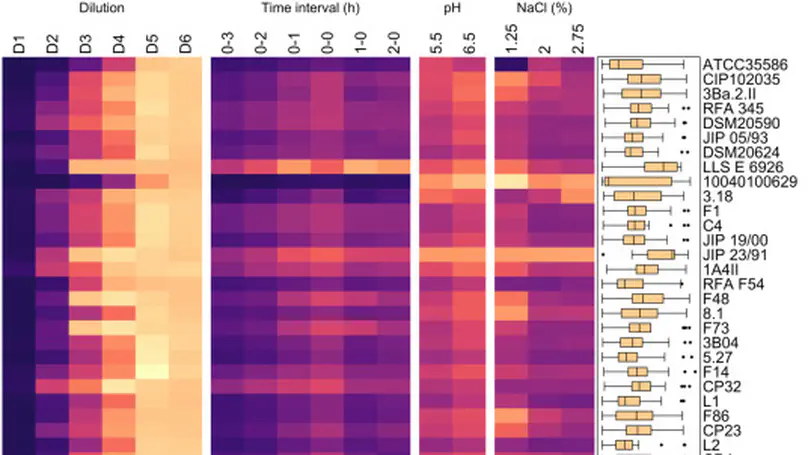
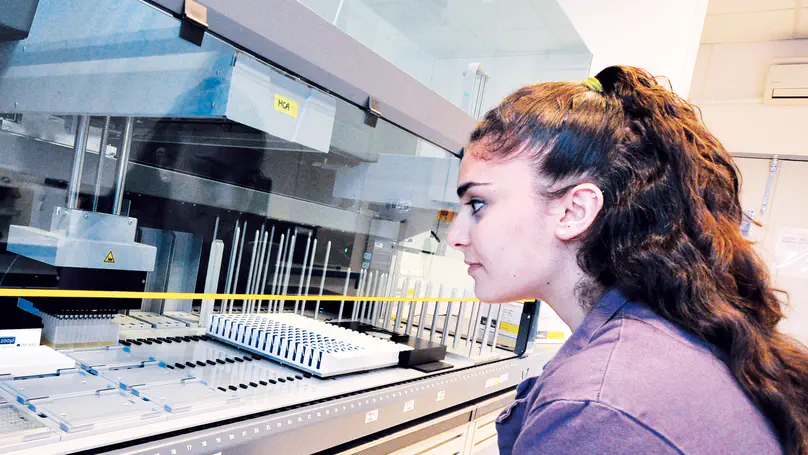
I’m a food microbiologist at the University of Lorraine in France. My research focuses on the engineering of fermented food ecosystems. The objective is to design new approaches to engineering microbial cultures for the food industry. The targeted application is mainly biopreservation, a sustainable approach to increase food safety and extend food shelf-life in order to reduce food waste. My team has developed high-throughput phenotyping approaches to study the behaviour of candidate microorganisms in a multi-dimensional space. The ambition is to take into account the ecosystemic complexity of foods in order to obtain food microbiomes that are resistant to colonisation by undesirable microorganisms with high robustness. I teach engineering students food safety, biotechnology (omics) and statistical data analysis.
Skills

Topic : Food ecosystem engineering
- Genomics: assembly in Galaxy environment, annotation and comparative genome analysis with MicroScope Mage
- Microbial Diversity: MultiLocus Sequence Typing (MLST), taxonomic identification
- Community structure: metabarcoding in Galaxy and R
- High-Throughput phenotyping: bacterial collection screening, Inhibition graph analysis
- Data analysis: data manipulation and statistical analysis with the R programming language

Topic : molecular pathogenesis of Streptococcus agalactiae
- Genetic engineering: heterologous protein expression, mutant construction
- Immunoassays: Western Blots, ELISA
- Bacteria-host interaction: cell line culture, adhesion and invasion assays
Recent Publications
Data Repositories
Supervised theses
Contact
- frederic.borges@univ-lorraine.fr
- +33 (0)3 72 74 40 85
- 2, avenue de la Forêt de Haye, BP 20163, Nancy, 54230